
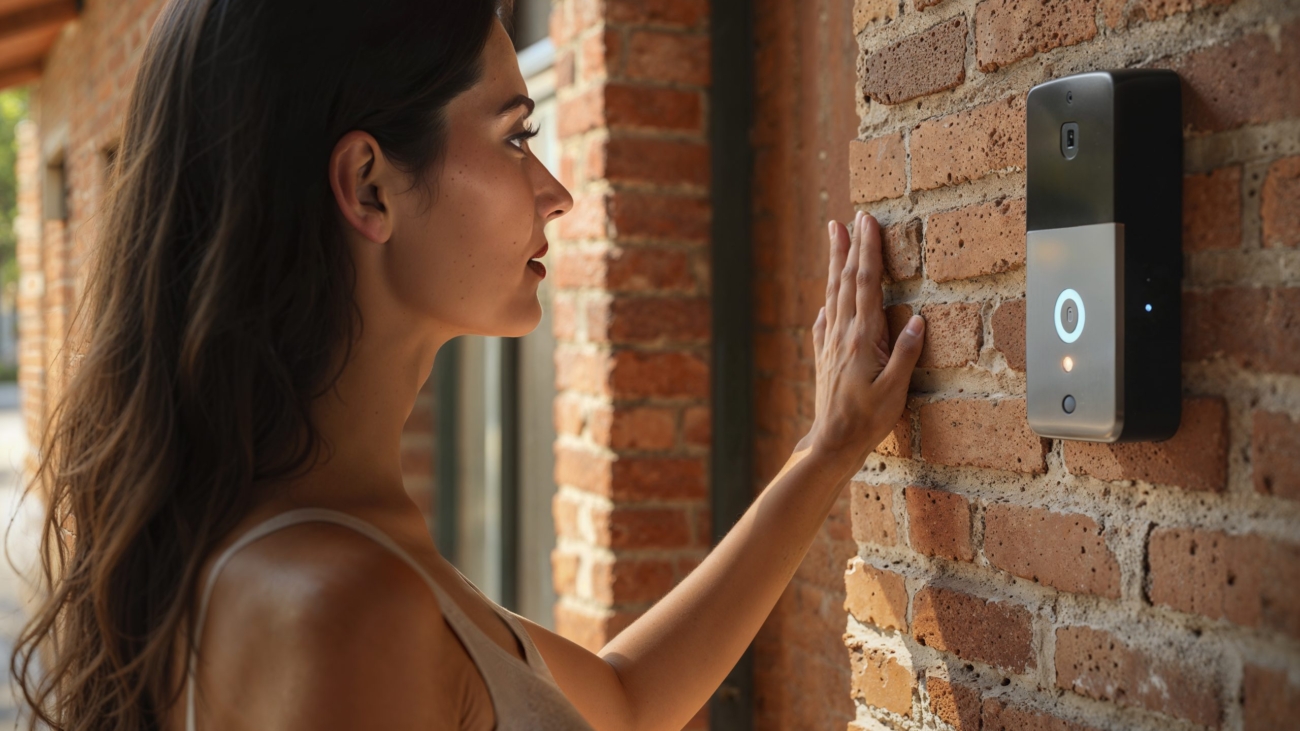
Question: Why does privacy matter so much in a connected home?
Because household devices can reveal patterns of daily life. Motion sensors may indicate when rooms are occupied, cameras can capture personal activity, and connected locks may maintain records of access events. Even when this information is collected for legitimate functions, people should understand what is recorded and who can access it.
Question: Is every smart device constantly listening or watching?
No. Devices differ considerably in their sensors, recording behavior, and data processing. A motion detector does not have the same capabilities as a camera, and a voice assistant may process commands differently depending on its settings and model.
Users should consult device documentation to understand when microphones or cameras are active, what triggers recording, and whether processing occurs locally or through remote services.
Question: What should someone check first when installing a camera?
Start with its field of view. Aim it toward the area it is intended to monitor and avoid capturing more private space than necessary. Review recording schedules, access permissions, storage options, and notification settings.
A camera with unnecessary access or an overly broad view may collect more information than the household needs.
Question: Does a strong password solve the security problem?
It helps, but it is only one part of the process. Use unique passwords, enable multifactor authentication where available, and keep device firmware and associated applications updated. Review account access periodically, particularly after changing household arrangements or sharing access with visitors.
Network configuration can also matter. Separating compatible smart devices from computers and personal devices may reduce the consequences of a compromised product, although the effectiveness depends on the router and how the network is configured.
Question: Are cloud-connected products inherently less private?
Not automatically. Cloud services can support remote access, backups, and advanced features, but they also introduce questions about data transmission, storage, retention, and third-party processing. Local processing may reduce some forms of data sharing, though it does not eliminate every security risk.
The appropriate choice depends on the device’s purpose and the level of control the household wants.
Question: What about guests?
Guests may not expect cameras, voice assistants, or activity sensors to be recording. Make relevant devices and their behavior clear, and consider disabling unnecessary recording in private areas. Shared spaces deserve thoughtful treatment too, particularly when visitors stay overnight or work inside the home.
Question: How often should privacy settings be reviewed?
Review them after major software updates, changes to household membership, or the addition of new devices. A periodic check is also useful because applications can introduce new settings or change how existing features operate.
The principle worth keeping
Privacy is not a single switch that can be turned on once and forgotten. It is an ongoing set of decisions about what information a home collects, how long it retains that information, and who is allowed to use it.
A connected household can enjoy convenience without surrendering every detail of its daily life. The key is deliberate configuration rather than blind trust in default settings.


